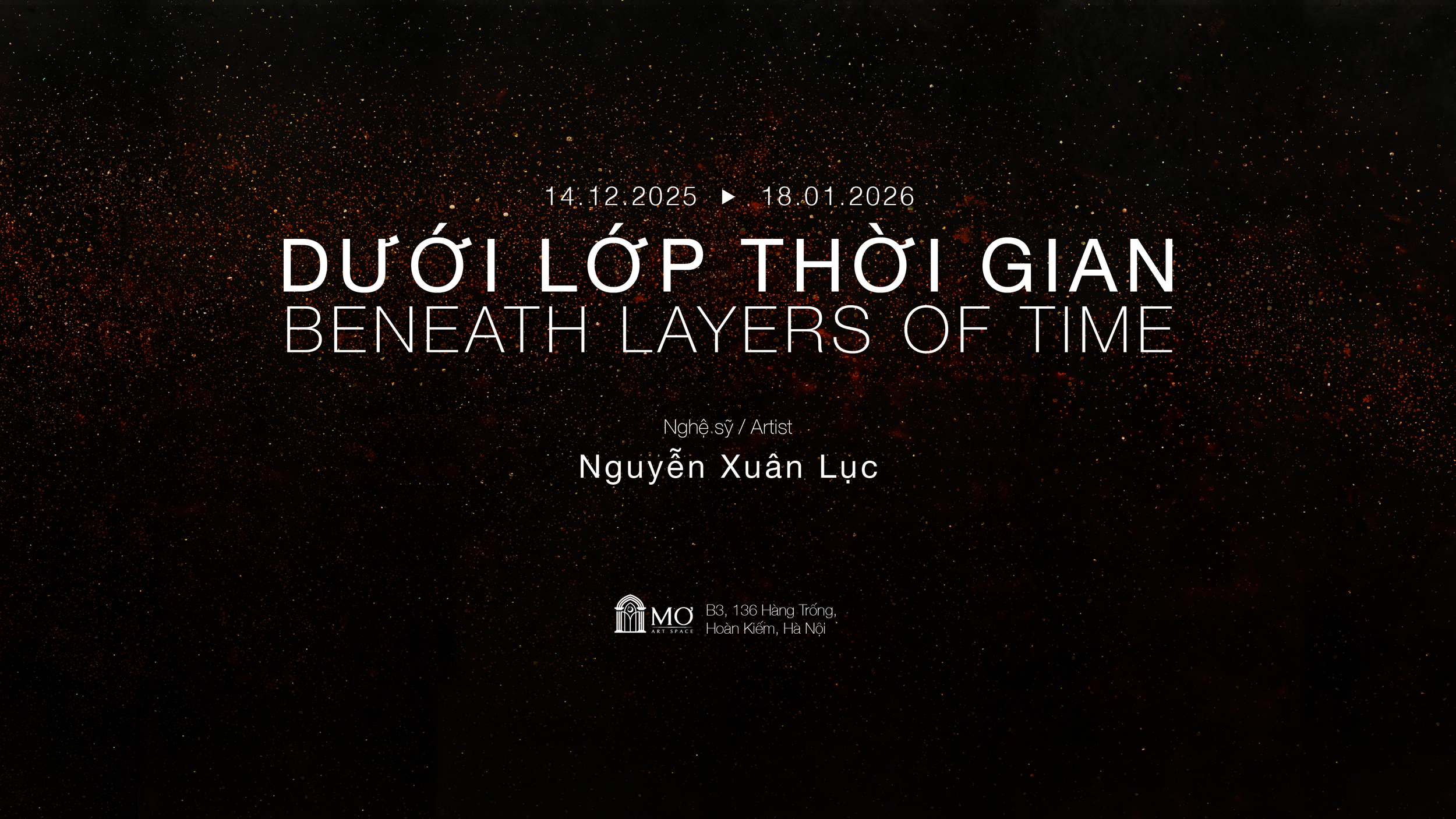
A solo exhibition
BENEATH LAYERS OF TIME
Artist: Nguyen Xuan Luc| Writer: Hue Nguyen | Duration: 14/12/2025 - 18/01/2026
Preface
Light, stardust, and waves
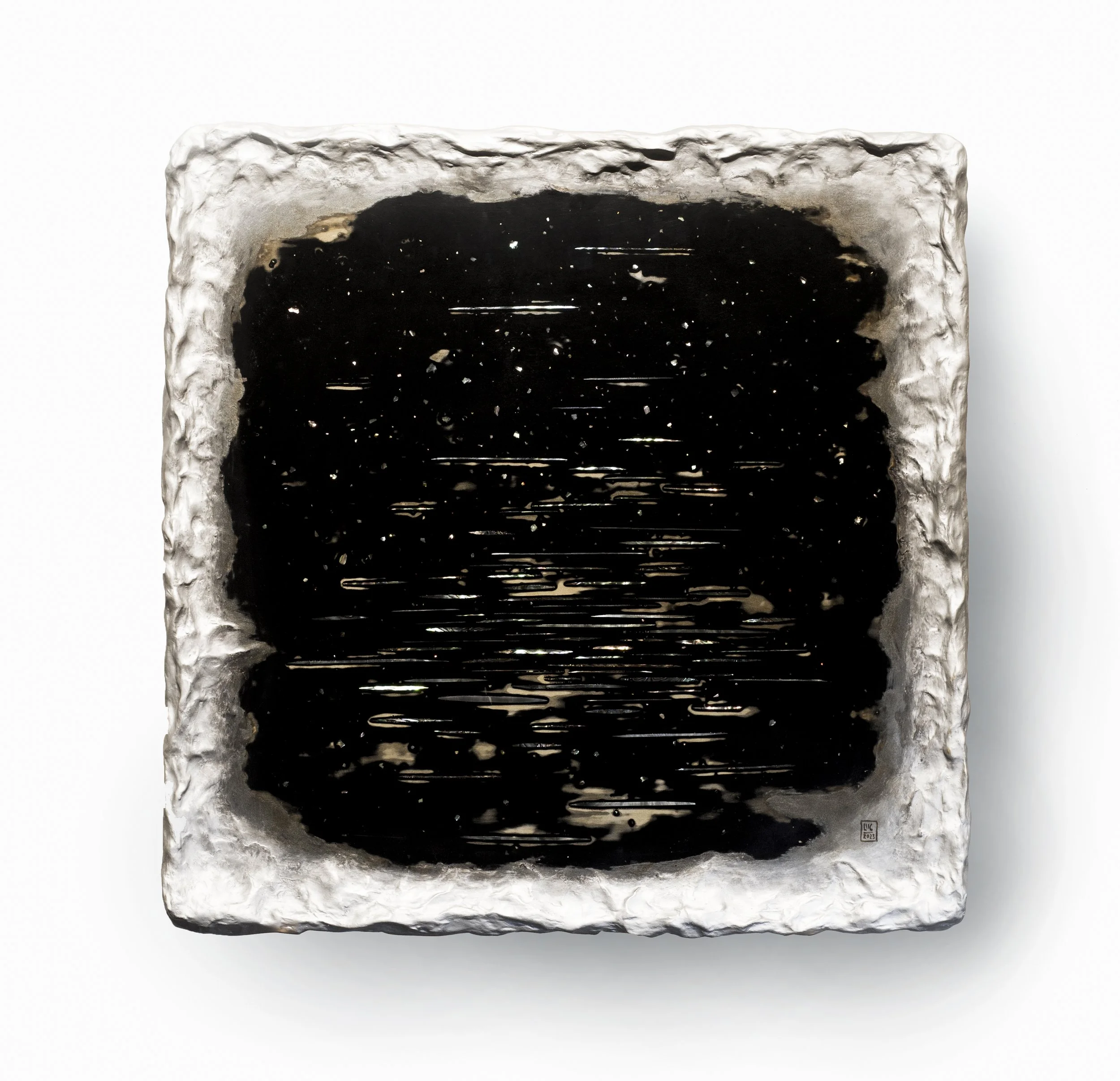
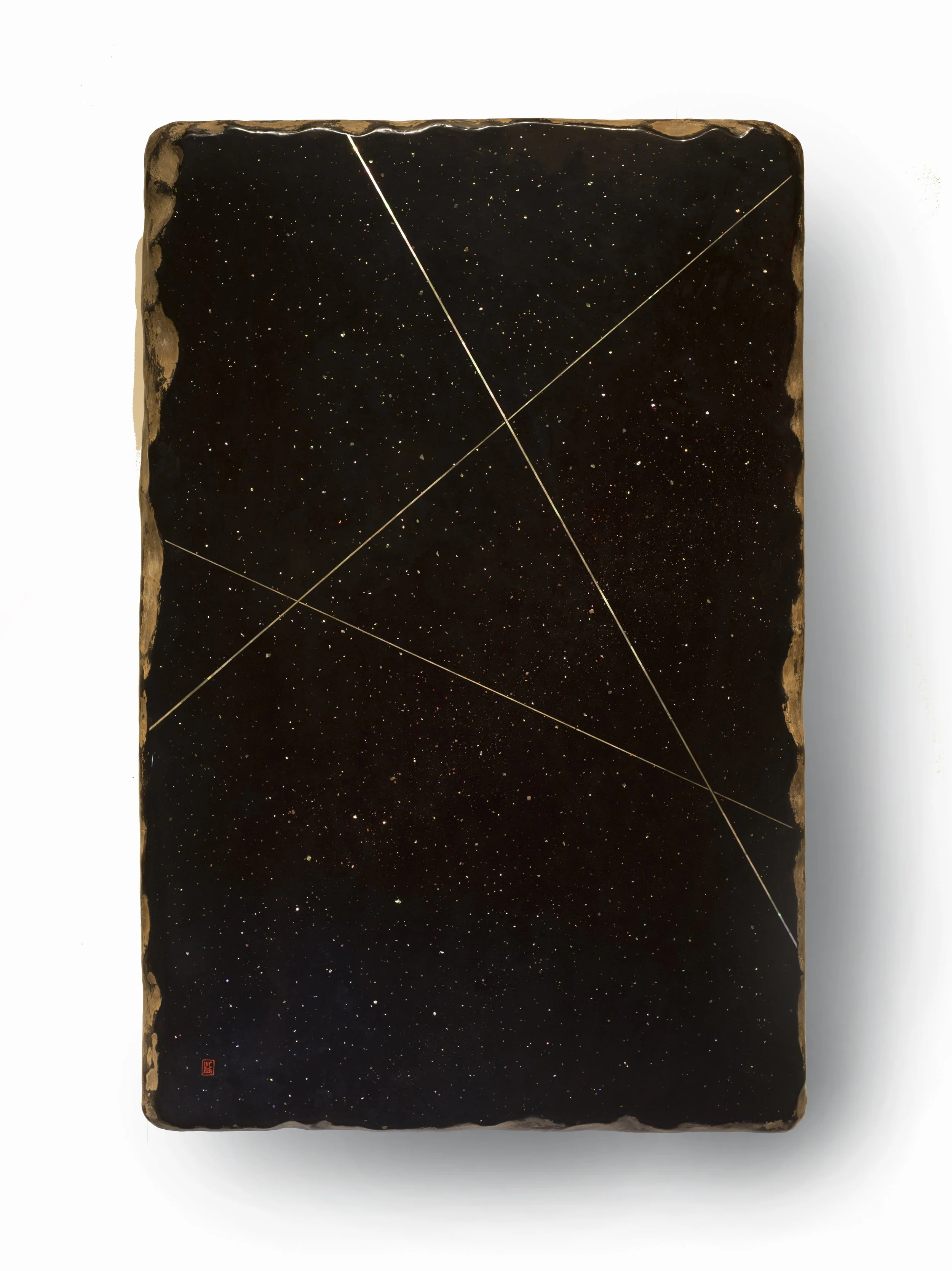
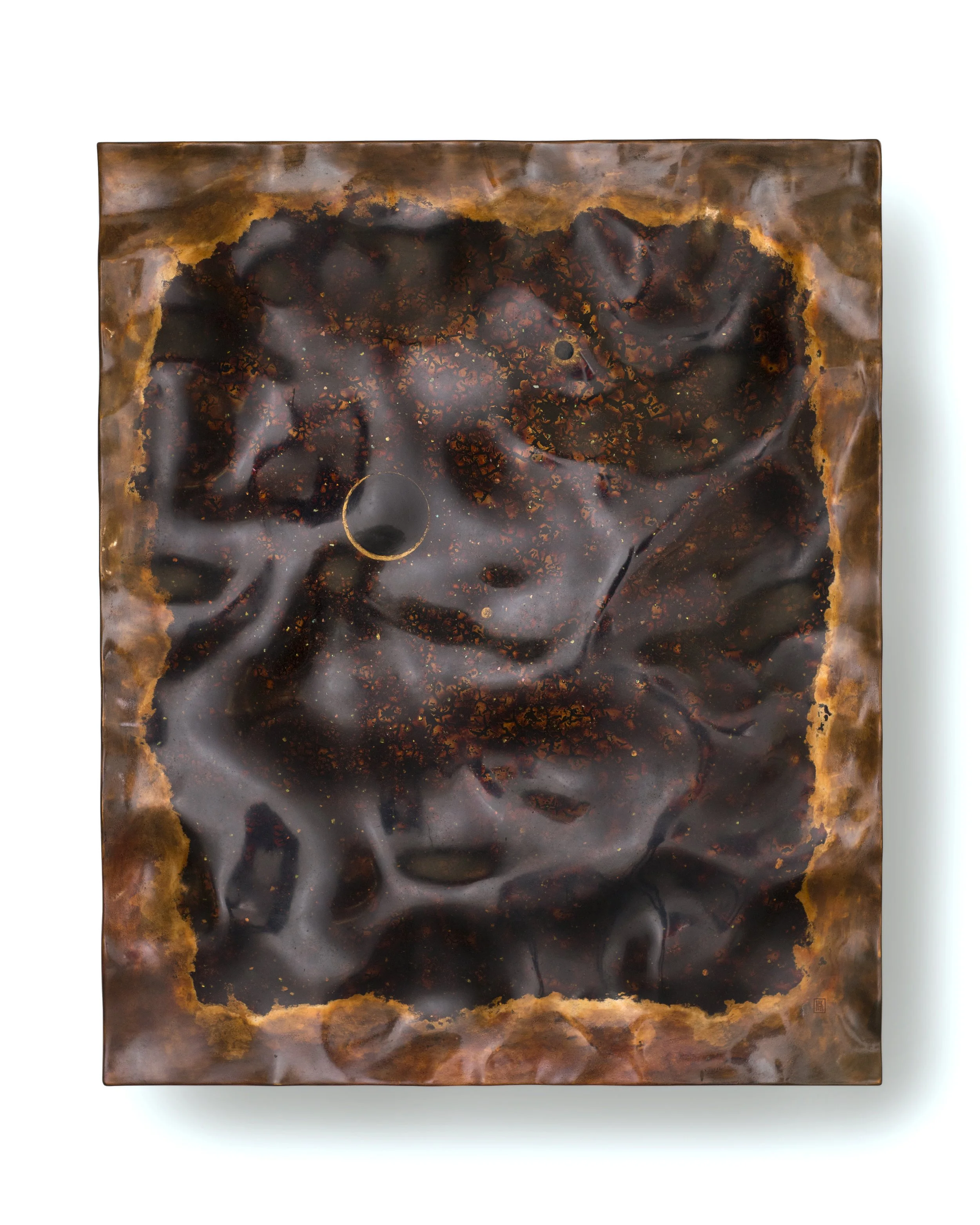
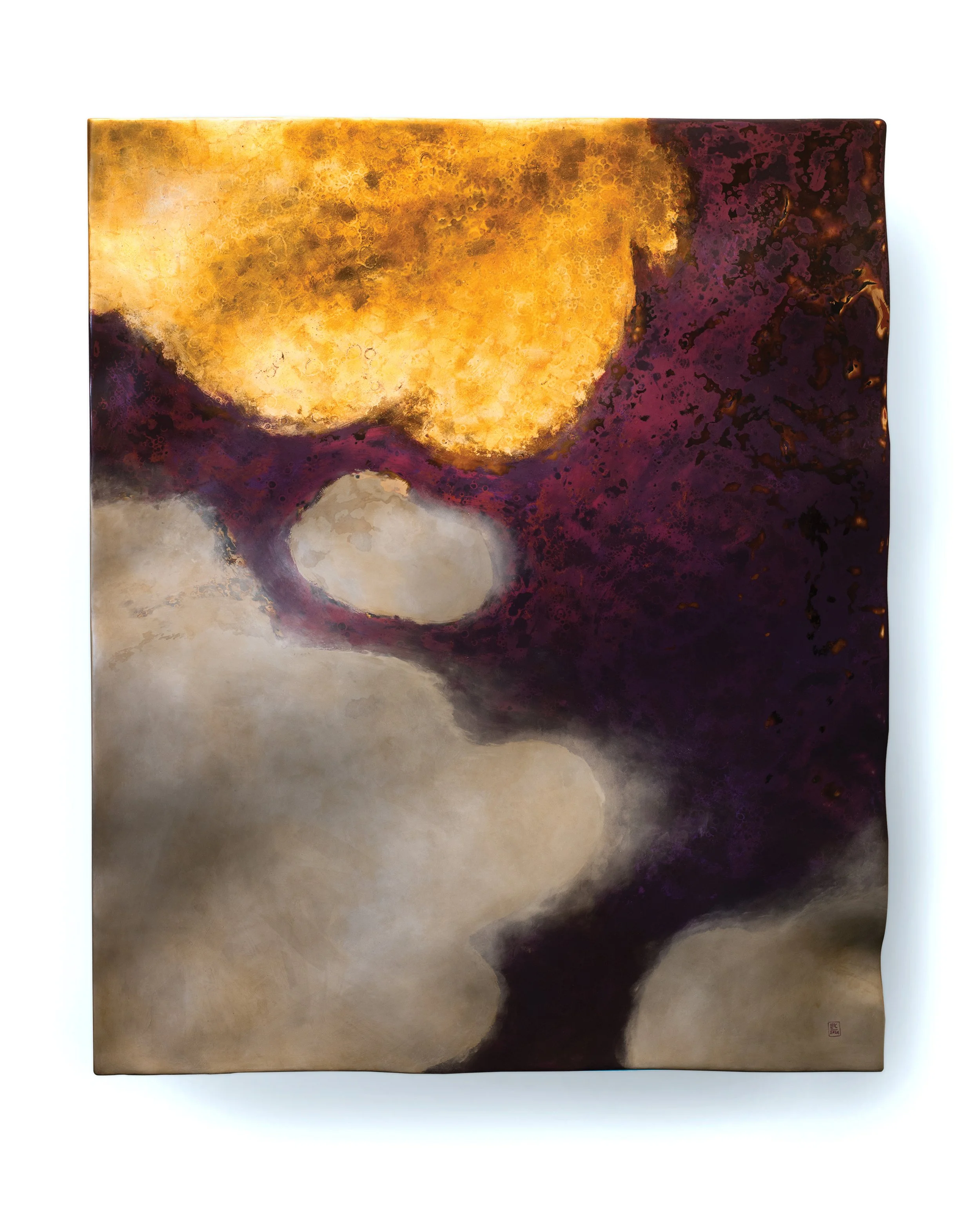
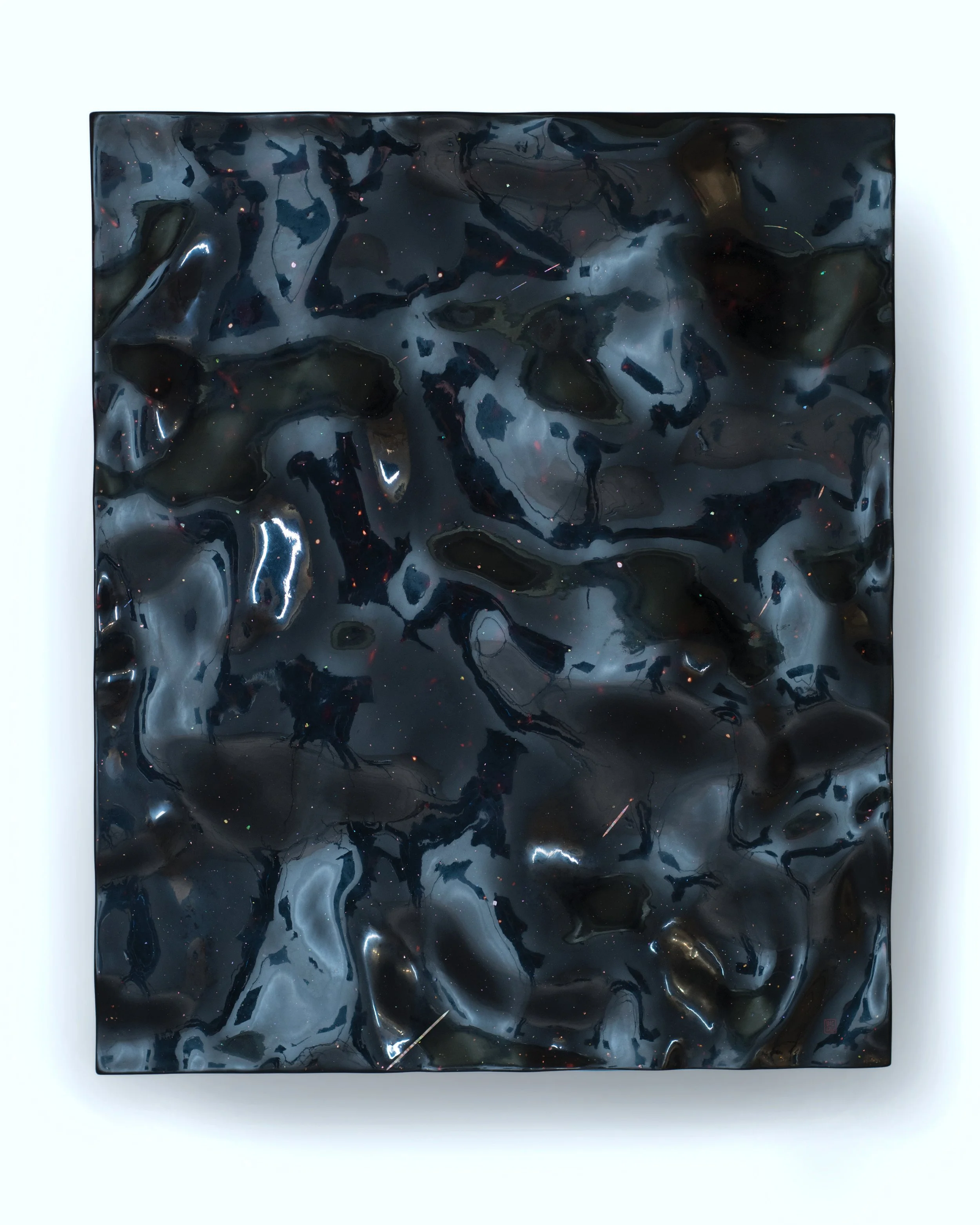
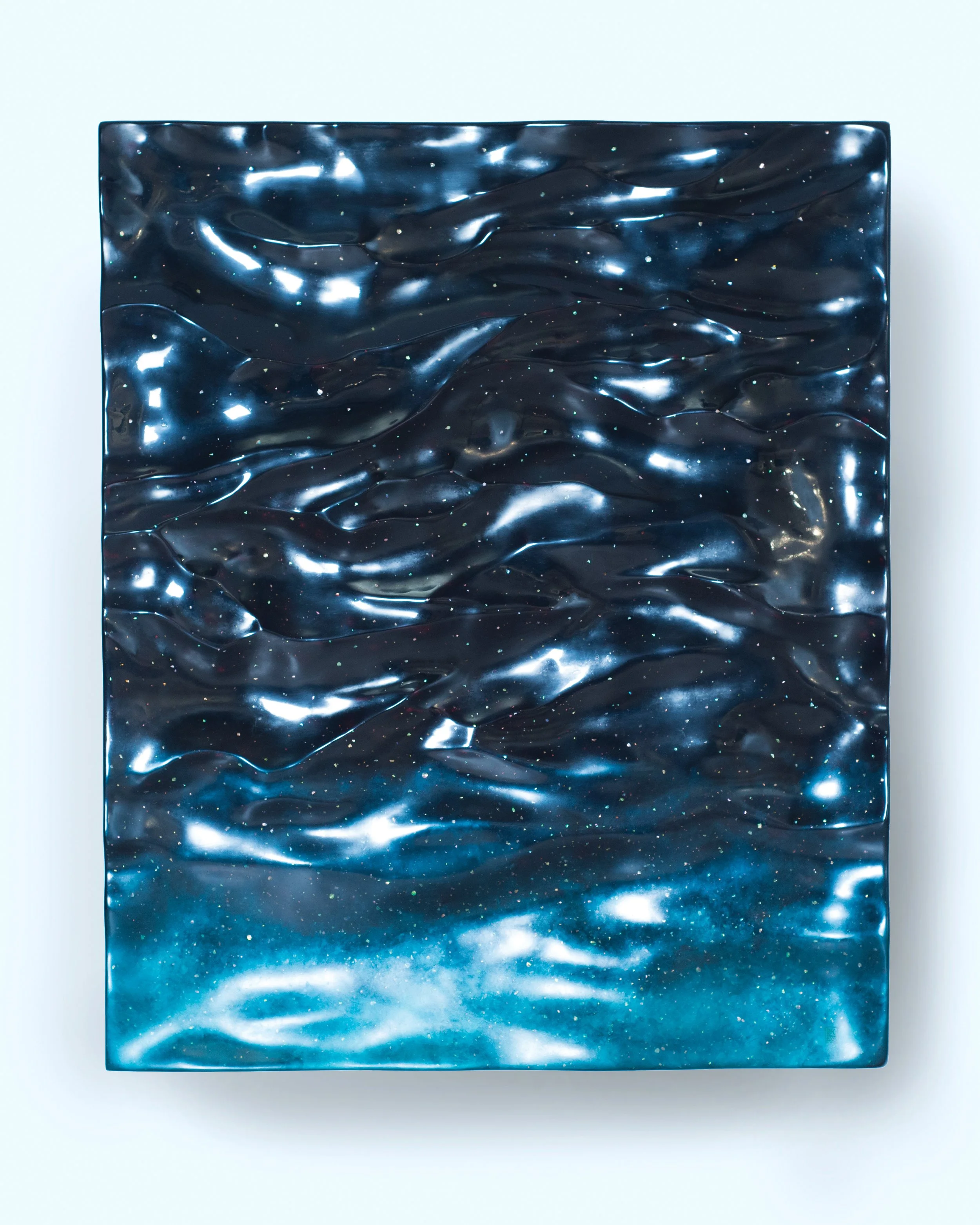
In a dark landscape, light cuts through the stardust on an uneven surface diffracting multiple images. The viewers find themselves exploring in Nguyễn Xuân Lục’s space of matter constituted by his lasting experimentation with Vietnamese lacquer sơn ta, layers of paint, mother of pearl, cloth, paper, soil, and water. It opens up a horizon in which light not only shines but also becomes a material and a happening phenomenon.
In the convention of Vietnamese lacquer sơn mài, light can be seen in a glossy sheen inscribed with silver and gold leaves, egg shells, mother of pearl that has gone through multiple times of painting and sanding. Thus, it is a subtle source of light emerging from a dense radient surface. Born and growing up in Chuôn Ngọ craft village renounced for mother of pearl inlay, Nguyễn Xuân Lục acknowledges that an overuse of mother of pearl will render Vietnamese lacquer no less than a mere decorative intent. Thus, the artist in his works retrieves its utmost potential of embodying light. With that, it doesn’t serve to accompany the painting composition but becomes the main subject of inquiry. With iridescent and shimmering highlights, the mother of pearl in Luc’s works takes shape in series of stardust, rays of sharp lights penetrating the space, crisscrossing each other against the deeply back lacquer sơn then and brownish cockroach-wing-color lacquer sơn cánh gián. This mysterious yet captivating light has been recurring throughout “Beneath Layers of Time” (2025) and previous exhibitions “Dust” (2019) and “Lacquer & Paper” (2020). Taking the center stage in the biggest piece “Genesis 17,” the mother-of-pearl stardust drifts away in the dark background expanding the whole wall. In front of the piece, the viewers encounter an endless space of light and darkness operating on their own terms.
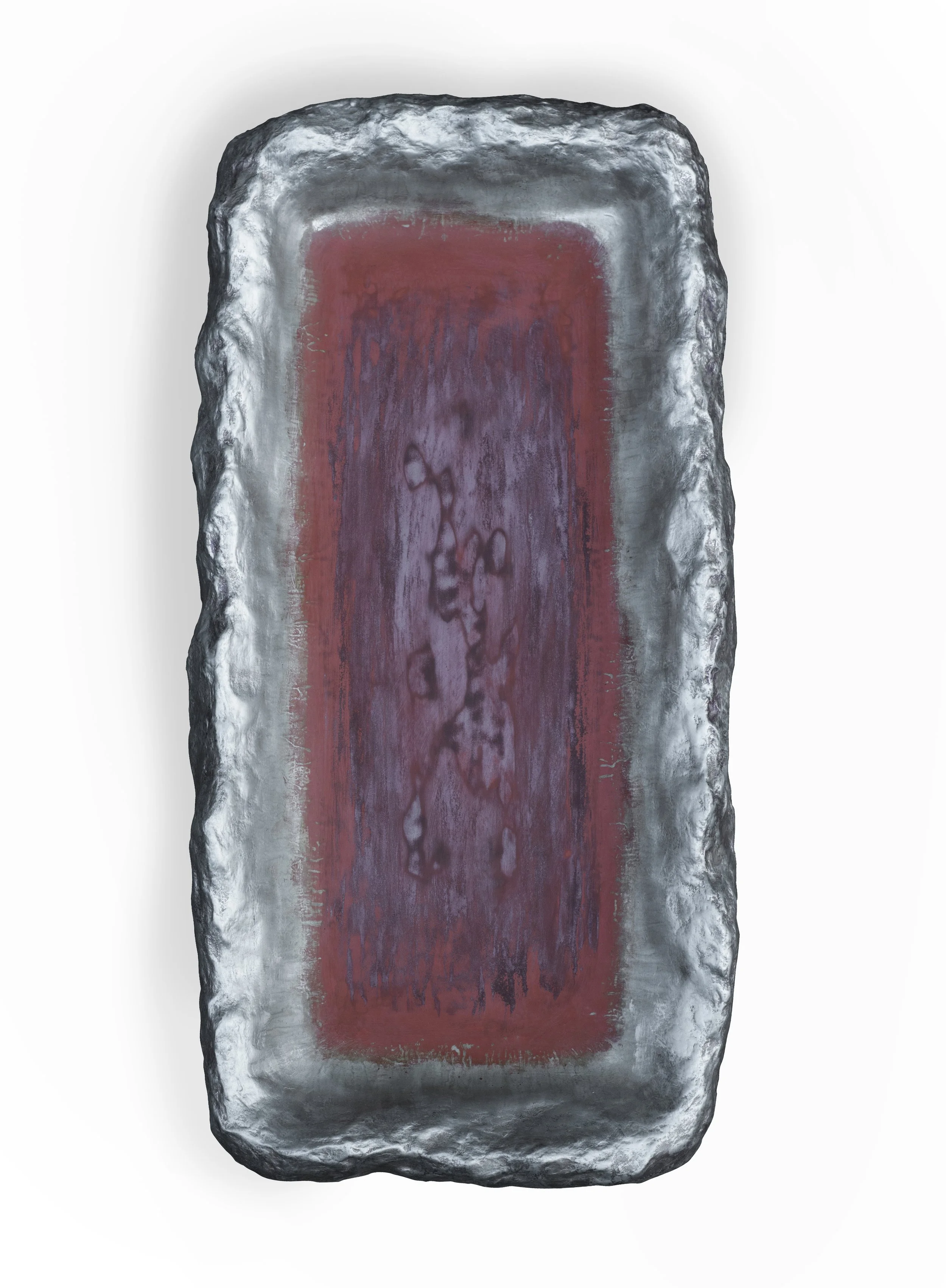
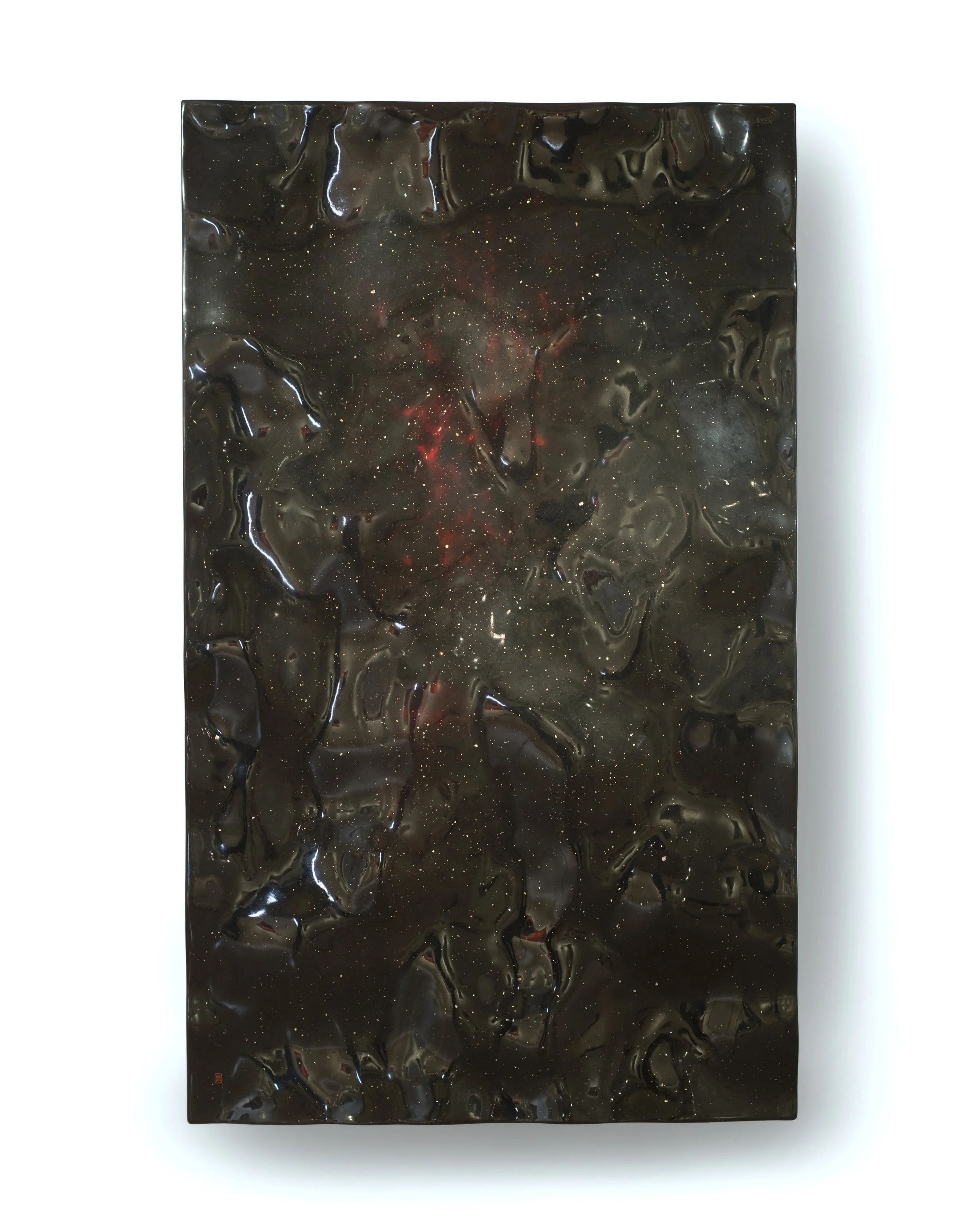
Apart from light, Lục’s practice arises the question of whether Vietnamese lacquer is still in the realm of “painting” and to what extent it becomes "sculpture." Indeed, the artist’s practice goes beyond a flat surface and the conventional definition of painting. Thinking about Vietnamese lacquer as an experimental ground for different forms, the lacquered baseboard vóc is not only confined to wooden materials but also embedded in a three-dimensional form of objects. In the experimenting process, the artist molded uneven or undulating forms, then mounted it with multiple layers of cloth or mix giang paper pulp with raw lacquer to create the baseboard. To achieve the desirable thickness and endurability of the baseboard, the making of the baseboard includes applying resin, letting it dry, sanding then the procedures start over and over again. This repetitive process engenders a lacquered surface of letting go and retaining, eroding and accumulating of time that factors into the very first steps. With time stretched and space extended, Vietnamese lacquer has a great potential for sculpture and thus impels the artist to embark on an ambitious idea in recent years.
In Nguyen Xuan Luc’s practice, when Vietnamese lacquer rests in sculpture form, the visual experience changes accordingly. The multi-dimensional, wavy, and luminous lacquer finish in series “Reflection” and “Sediment” alludes to an aesthetic unable to retrieve through lens-based practice which captures a moment frozen in time. Rather, light, stardust, and the waves entails an everchanging account of the artworks pertaining to the viewers’ standpoints. This on-going phenomenon renders them no longer the remains of the past. They are entities in constant reconfiguration, which partly reflect the artist’s thoughts on the weirdly similar trait between humans and non-humans always being subject to change.
Scattered throughout the exhibition are the lacquered stone and pillar titled “Sediment” – the companion work as part of the large-scale sculpture series in which the artist is experimenting with giang paper pulp and sơn ta as the support structure. The uneven texture of the lacquered pillar is an interesting juxtaposition with other artworks of the exhibition, thus demonstrating the versatility of Vietnamese lacquer. These sculptures are reminiscent of the celestial bodies left by a collision as well as banal objects familiar to us. They carry double layers of memories: one of the cosmology - of dust and drift, and the other of the land - where materials are foraged, sedimented and transformed in the artist’s enclosed lacquer.
The exhibition opens up an intersection of the micro and the macro. Light, stardust and waves are reminiscent of the universal flow and at the same time suggestive of the material changes taking place on a daily basis. Henceforth, the magnificent and banal, eternal and ephemeral both co-exist. As we human beings interact with the artworks just like matters, each vantage point calls for a reconfiguration of the artwork. In that process, lacquer in Nguyen Xuan Luc's practice is by no means a means for painting but a becoming entity that moves in time and space, both remembering and transcending.