WHERE SHADOWS BREATHE
Artist: Iris Sa (Phuong Nguyen)
Curator: Do Tuong Linh
Duration: October 04, 2026 to November 15, 2026
Constructing a Feminine Cosmos: Body, Memory, and Other Worlds in the Practice of Iris Sa
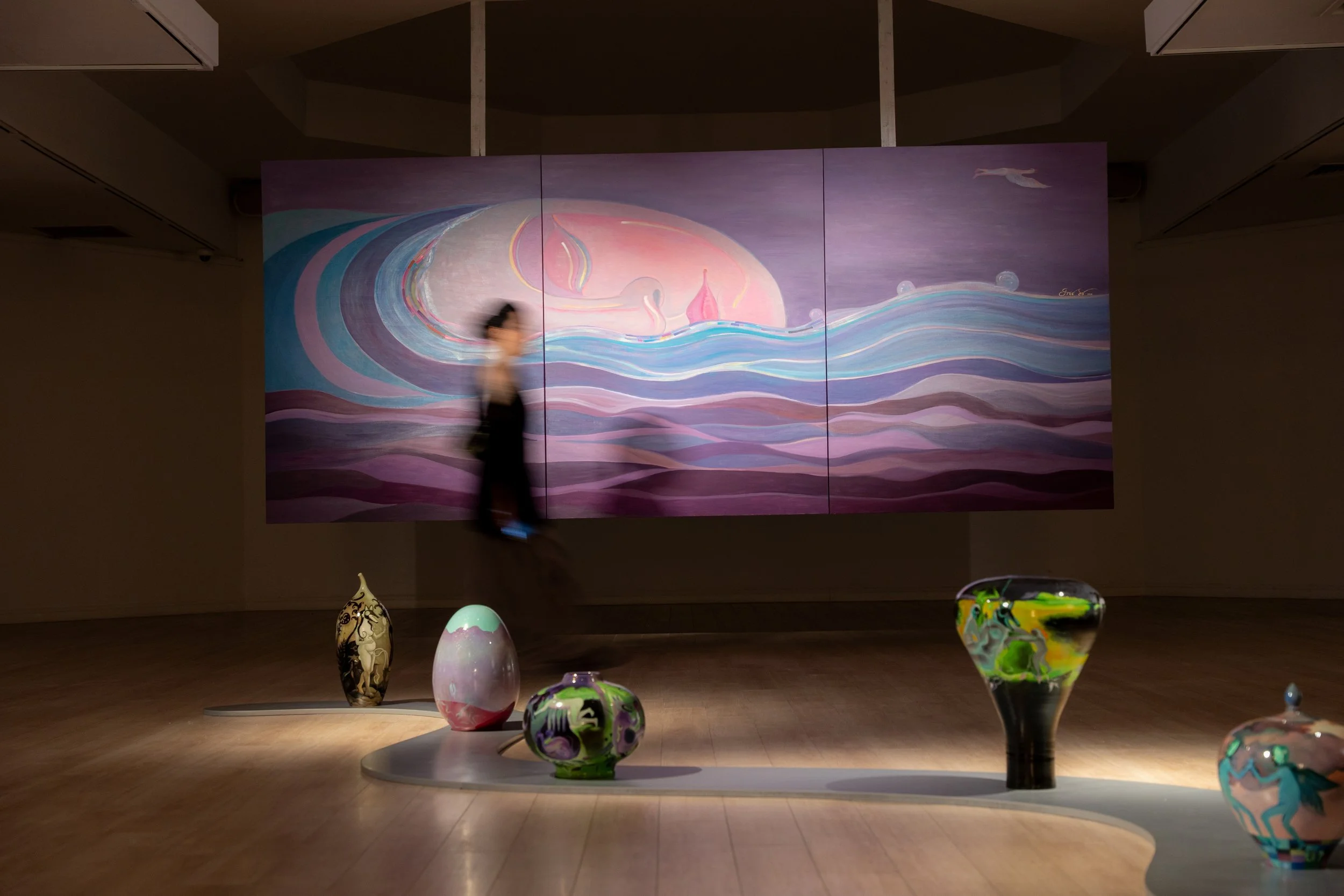
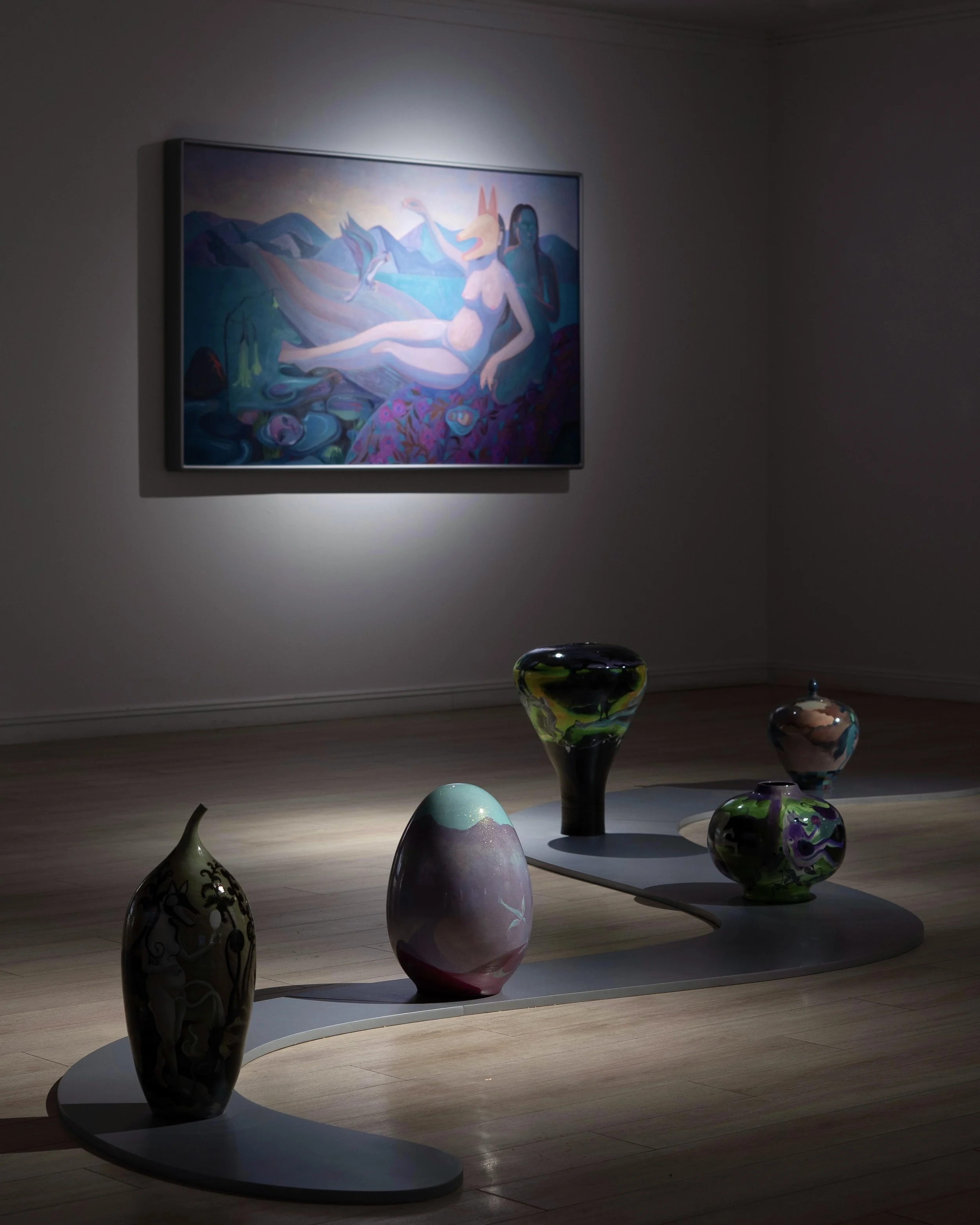
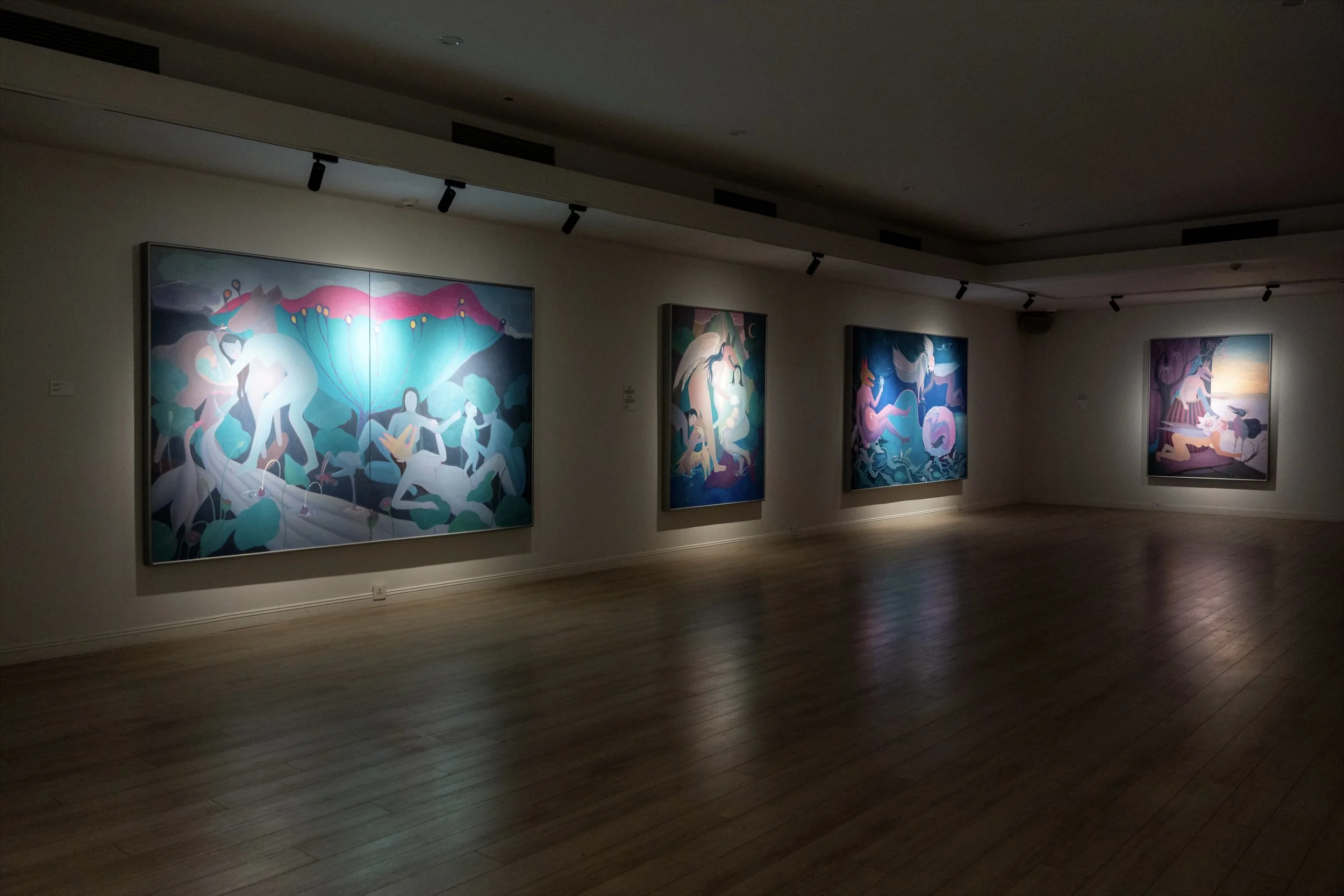
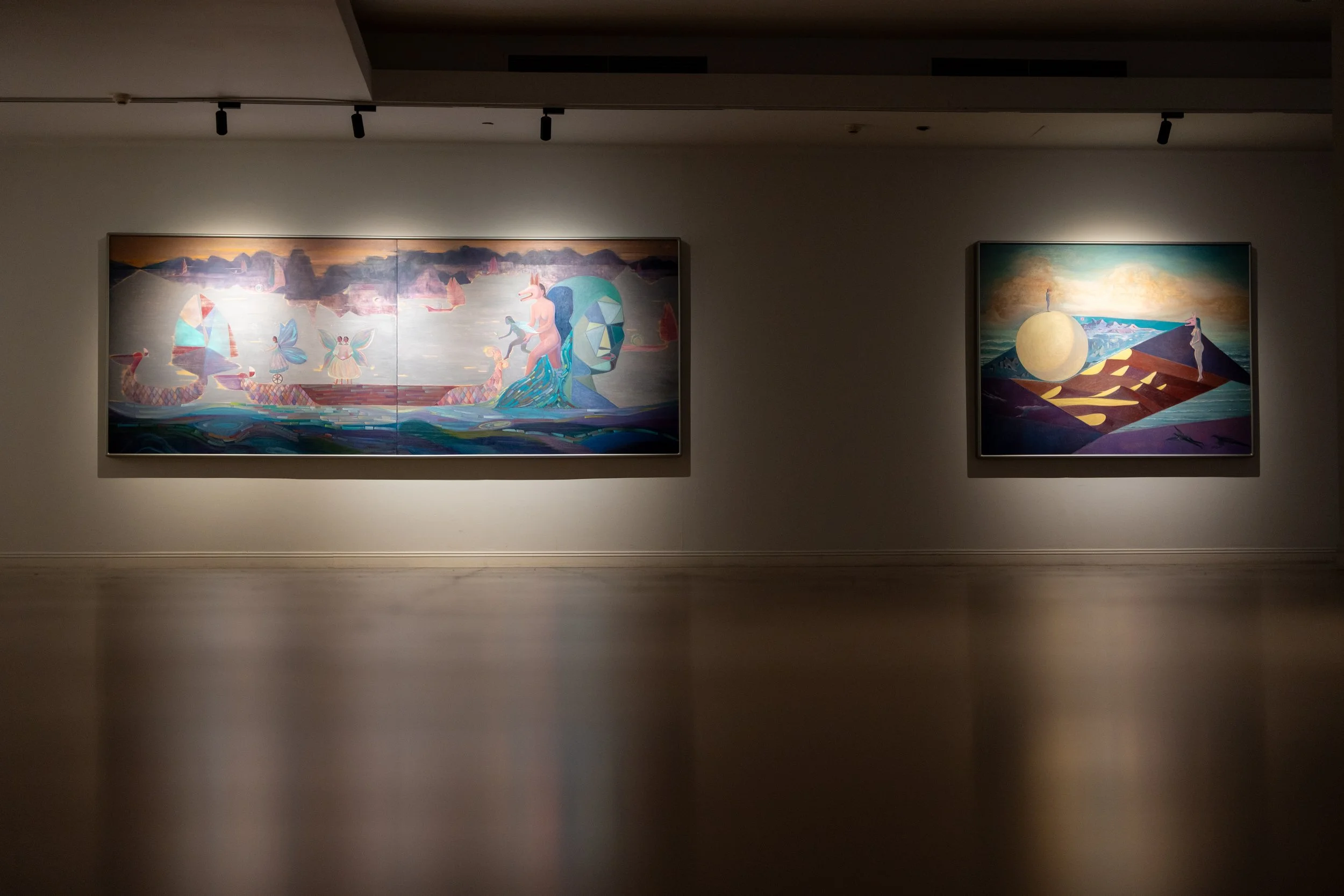
The practice of Iris Sa (Phuong Nguyen, b. 1998) is grounded in an intersection of magical realism, dreams, and forms of cosmological imagination. Across her paintings and ceramic works, the artist constructs a world in which women, animals, plants, and hybrid beings exist beyond the stable laws of reality. This space is not merely an imagined setting, but a means through which the artist investigates questions of being, memory, female identity, and the relationships between human beings and the natural world.
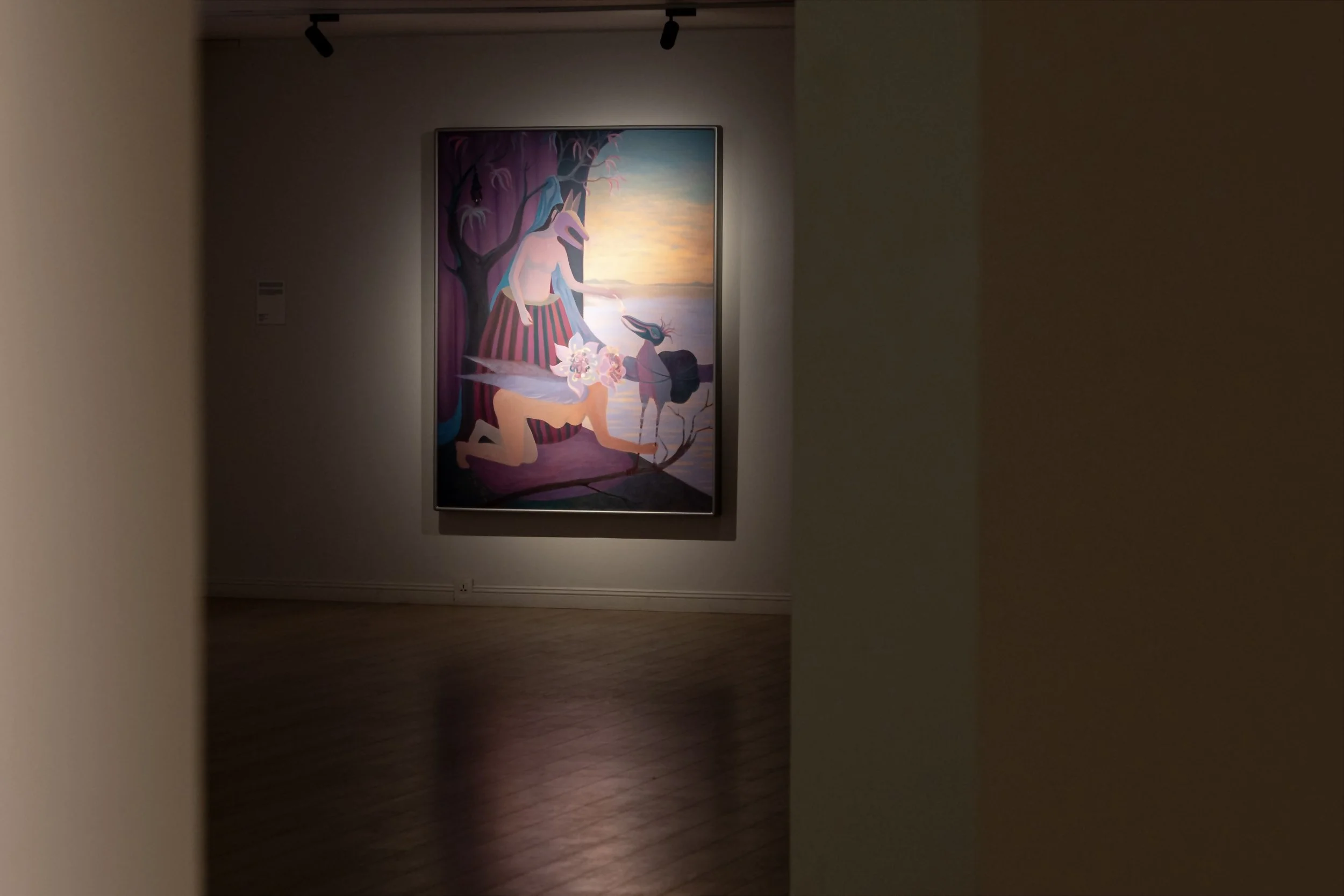
One of the most striking characteristics of this world is the overwhelming presence of women. Yet the female figures in Iris Sa’s work are never constructed as a singular symbol of femininity. They appear in multiple psychological states and modes of existence: as mothers, as wounded bodies, as observing subjects, as beings closely attuned to the natural world, or as alternative versions of the artist herself. Through shifts in scale, colour, posture, and bodily form, Iris Sa continually questions the stability of identity: what constitutes a human being, a woman, or an “I”?
In Iris Sa’s world, women no longer exist simply within familiar social spaces. They are placed within surreal landscapes where plants exceed the scale of the human body, animals appear as beings capable of interaction, and human forms may transform into hybrid states. Such transformations destabilise the boundaries conventionally understood as fixed between human and non-human, body and environment, nature and culture, reality and dream.
Painting as a Mode of Knowledge-Making
In her artistic statements, Iris Sa repeatedly describes the artwork as an “inner dialogue.” She uses painting as a way of moving through different layers of personality and exploring alternative versions of herself. The creative process therefore does not begin and end with the expression of a predetermined idea. Instead, the image itself appears to become the means through which an idea takes shape. Painting can thus be understood as a cognitive practice: not simply a way of representing a world already known, but a means of encountering a world that remains only partially known.
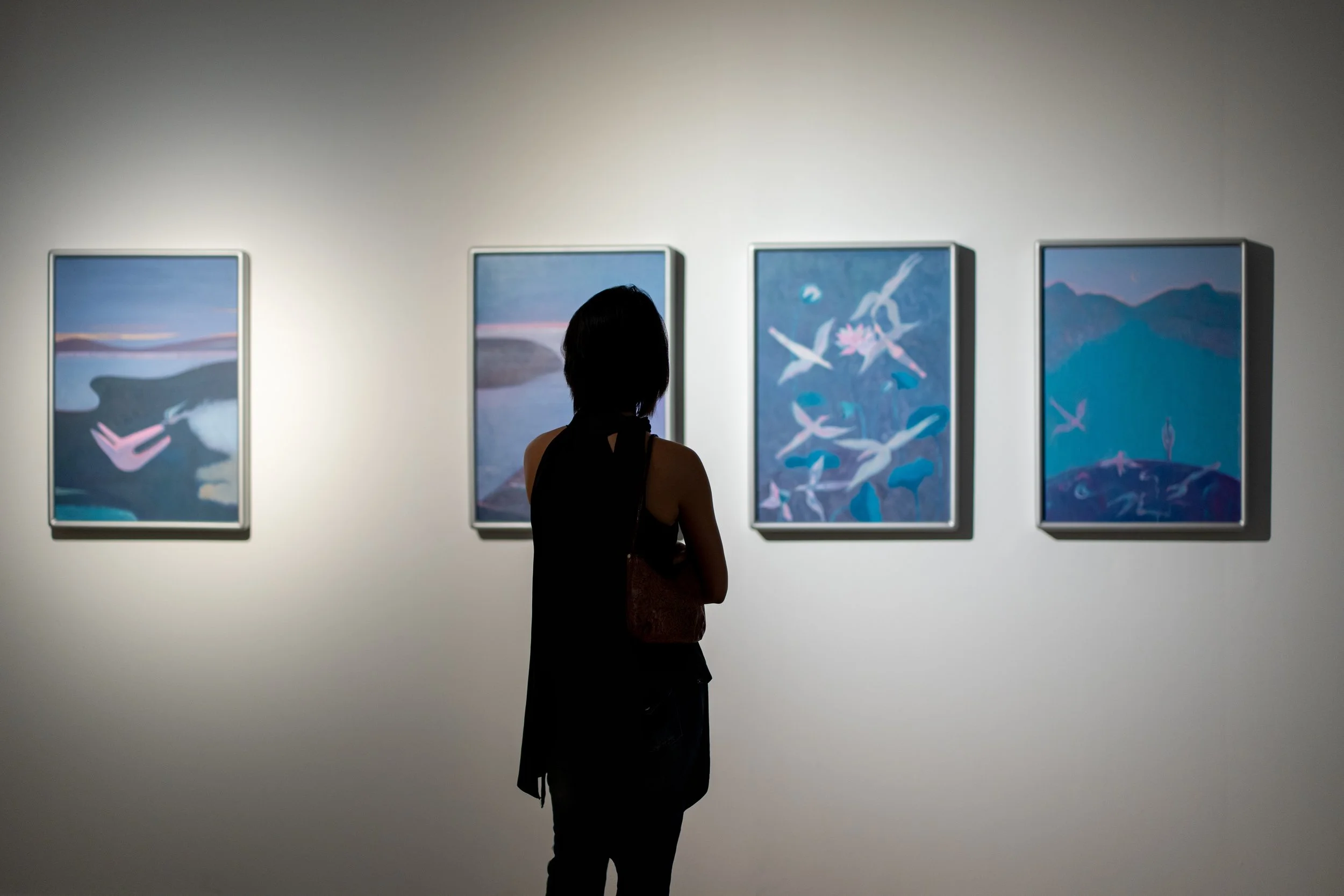
Her female figures often possess rounded, full bodies, covered in soft, flat fields of colour that merge with the palette of the natural world. Blues, purples, and pinks create a dreamlike atmosphere, while their faces often maintain a certain distance, concealing emotion or meeting the viewer with an expression that remains difficult to decipher. The tension between visual beauty and psychological ambiguity becomes a defining quality of the work. Here, the female body is not presented as an object to be observed, but as an unfinished subject, perpetually in the process of transformation.
From the Feminine to the Non-Human World
Another important element in Iris Sa’s practice is the presence of animals and plants. If women occupy the centre of her visual world, nature provides that world with a broader network of relationships in which the human no longer occupies an absolutely central position. Enormous trees create a destabilising difference in scale between human beings and their environment. Animals appear not merely as symbols but as companions, objects of observation, or subjects possessing another form of knowledge. Plants are personified and given qualities that bring them closer to the human body. This approach can be considered in relation to notions of animism that Iris Sa has encountered in her engagement with contemporary Asian art. Rather than understanding animism simply as the belief that natural objects possess spirits, however, Iris’s practice can be read as an attempt to unsettle the division between subject and object, between human beings and their environment.
A Cosmology of Becoming
Iris Sa’s continual creation of parallel worlds raises a broader question about the function of art: what can art do when language and reality are insufficient to contain an experience? For Iris, painting is a way of organising fragments of memory, emotion, and intuition that have not yet acquired a definite form. Through colour, scale, bodily form, and the juxtaposition of real and unreal elements, she constructs a visual system for things that cannot easily be named. Her “universe” should therefore not be understood as a world detached from reality. It is an alternative cosmos constructed from the very materials of lived experience: family memory, images of the mother, experiences of the female body, nature, animals, cultural traditions, and states of the unconscious.
Her works therefore do more than tell stories about women. They ask what it means for a female subject to construct a world from her own position. It is a world in which the body is no longer confined by predetermined definitions; in which memory can become mythology; in which nature is no longer a backdrop; and in which the human is not the only form of existence capable of sensing, remembering, or producing meaning. In Iris Sa’s practice, painting becomes a way of moving from the known toward the unknown, from memory toward imagination, from body toward landscape, from human toward non-human, and from fixed identity toward the possibility of continual becoming.
This world is not found. It is made.
And it is precisely through the act of making this world that Iris Sa comes to understand her own existence.
Download Catalogue Exhibition
EXHIBITION STATEMENT
EXHIBITION VIEW